
Bondage & rope
Bondage Dating with Dominant Women
Rope, cuffs, blindfolds and the women who love holding the other end – or being tied.
Members
Mature women on the site now
Real profiles of women aged 40 and over, shown as they join.
-

GildedCherub, 54
Bristol
See more members -

InspiringMusician, 55
Grimsby
See more members -

Hoffmanjennys, 42
Nuneaton
See more members -

NicoleSweet, 40
London
See more members -

SexySpiritual, 50
Thetford
See more members -

Rainfall, 62
Newcastle Upon Tyne
See more members -

Dommy, 44
Kendal
See more members -

Ameliiaivy2, 43
Doncaster
See more members -

GentleShark5f52f, 56
Helmsley
See more members -

Goddess Sasha, 41
Liverpool
See more members -

IntelligentConne, 50
Dilton Marsh
See more members -

Mistress Ella, 45
London Colney
See more members - Join to see more
What bondage is
Bondage is restraint: one person is tied, cuffed or held still, and the other is in control. It can be as light as a silk scarf around the wrists or as involved as a full rope tie that takes an hour to put on. What makes it bondage isn’t the equipment, it’s the handing over.
For the person who’s tied, that’s the thrill – no decisions, nowhere to go, nothing to do but feel. For the person holding the rope, it’s trust, focus and the power to take things exactly as slowly as she likes.
Here it’s usually the woman in charge: a domme who ties, a sub who waits for her to decide. But plenty of people switch, and plenty of women love being the one who’s tied. If female-led play is new to you, start with our femdom guide; the BDSM page covers the other kinds of play.

Kinds of bondage

Rope bondage
From a simple wrist tie to Japanese-style shibari. Slow to put on, beautiful to look at, and for many people the tying is the best part.
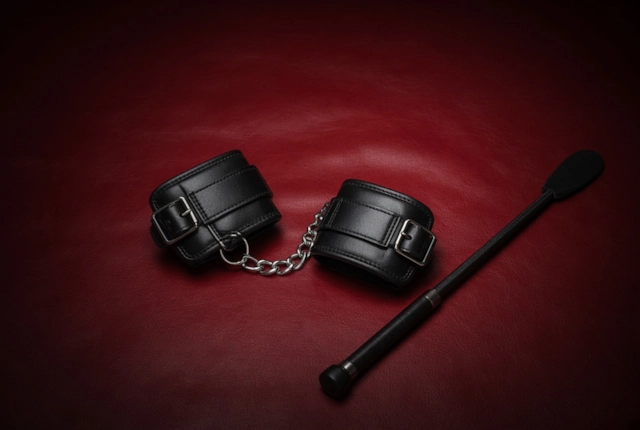
Cuffs and restraints
Leather cuffs, belts and straps: quick on, quick off, and the easiest way to start. Padded cuffs are kinder on the wrists than metal ones.

Blindfolds and hoods
Taking away sight makes every touch a surprise. A blindfold is one of the simplest things to add to any scene.

Collars and leads
Less about holding someone still, more about who belongs to whom. A collar can be worn for an evening or for much longer.

Chairs, beds and frames
Tied to a chair, spread across a bed, or fixed to a frame or cross – the furniture does the holding while she does the rest.

Tease and denial
Tied and unable to touch, while she decides how close to bring you – and whether you’re allowed to finish. Edging, with no way out.
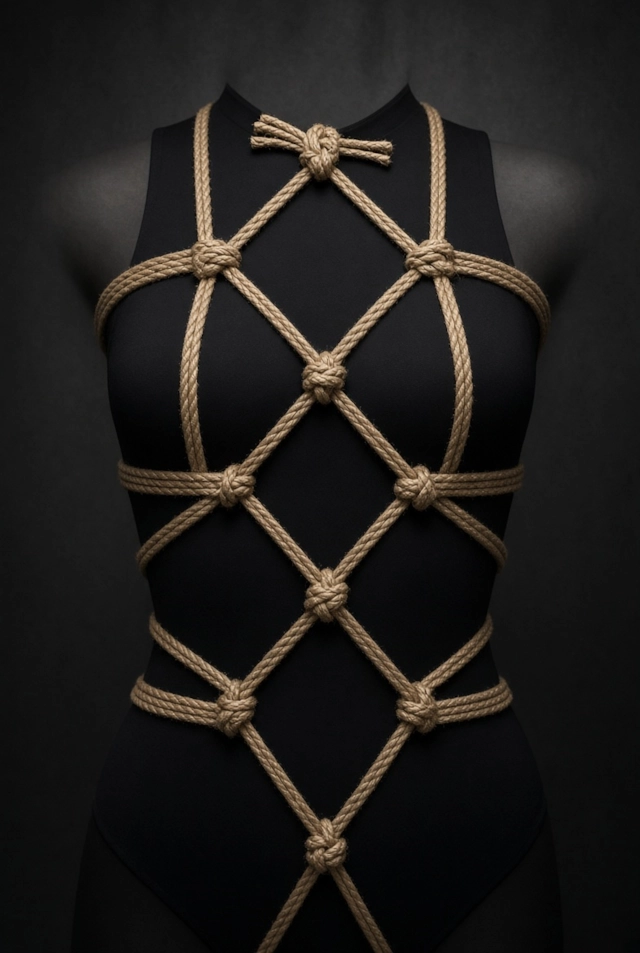
Rope and shibari
Rope is where bondage becomes a craft. Shibari, the Japanese style, is about patterns, tension and the time it takes; Western bondage is usually quicker and more practical. Both start in the same place: a single-column tie around one wrist, then a double-column tie that holds two wrists together.
Soft cotton or bamboo rope is forgiving for beginners. Jute and hemp hold knots better and are the traditional choice for shibari, but they’re rougher and need preparing. Whatever you use, learn a few ties properly before you try them on someone – a good tie is snug, not tight, and comes off fast.
Staying safe
Keep safety shears – the blunt-tipped kind paramedics use – within reach whenever anyone is tied. If something goes wrong, cutting the rope is always quicker than untying it.
Nothing goes around the neck, and nothing presses on the inside of the wrists, the armpits or the backs of the knees, where nerves sit close to the skin. Check hands and feet often: cold, numb, tingling or changing colour means loosen it now, not later.
Never leave someone who is tied alone, not even for a minute. Agree a safe word before you start, and a signal that works without speaking – dropping a set of keys, or three taps – for when a gag or a hood makes talking hard. Keep the first sessions short; time feels different when you can’t move. If you’re new to this, our guide to safe words covers the traffic-light system and silent signals in more detail.
Your first time
How to start
Five steps from profile to first tie.
-
Say it on your profile
Add Bondage, and whether you tie or get tied, so the right people find you.
-
Talk first
Use messages to agree what you both want, your limits and a safe word.
-
Meet in public
Make the first date a drink with people around, and let a friend know where you are.
-
Start light
Soft cuffs or a blindfold, a short session, and shears within reach.
-
Look after each other
Untie slowly, check for marks, and talk about what to try next time.
Finding a partner who wants the same
Put Bondage on your profile, along with BDSM, Dom or Sub, Edging or Leather / Latex where they fit, and you’ll show up for people looking for the same. When you write to someone, be clear about what you’d like to try and how much you’ve done – honesty up front makes for a far better first tie.
It costs nothing to join. A free membership lets you browse, like, match and message, within some limits, and VIP adds things like Incognito browsing and private group chats. You can verify with an ID or video check for free if you want to, and block or report anyone who doesn’t treat you well.
Bondage questions
I’ve never been tied up – where do I start?
With something you can take off in a second: soft cuffs, a scarf or a blindfold. Keep it short, check in often, and talk afterwards about what you liked.
What’s the difference between bondage and shibari?
Shibari is one style of rope bondage, from Japan, where the patterns and the act of tying matter as much as the restraint. Bondage covers every kind of restraint, rope or not.
Do I need special rope?
Not to start. Soft cotton or bamboo rope from a craft or kink shop is fine. Avoid nylon washing line, which tightens and burns, and keep safety shears nearby.
Who can join?
Women, men and couples are all welcome – whether you tie, get tied or like both – and you choose what goes on your profile.
Is joining free?
Yes – everyone starts free, and you can move up to VIP or VIP+ whenever you’re ready for more.